Caramelized onions, with a microwave head start
Ten minutes in the microwave drives off most of the water before the onions ever hit the pan, so they brown in about twenty minutes instead of an hour.
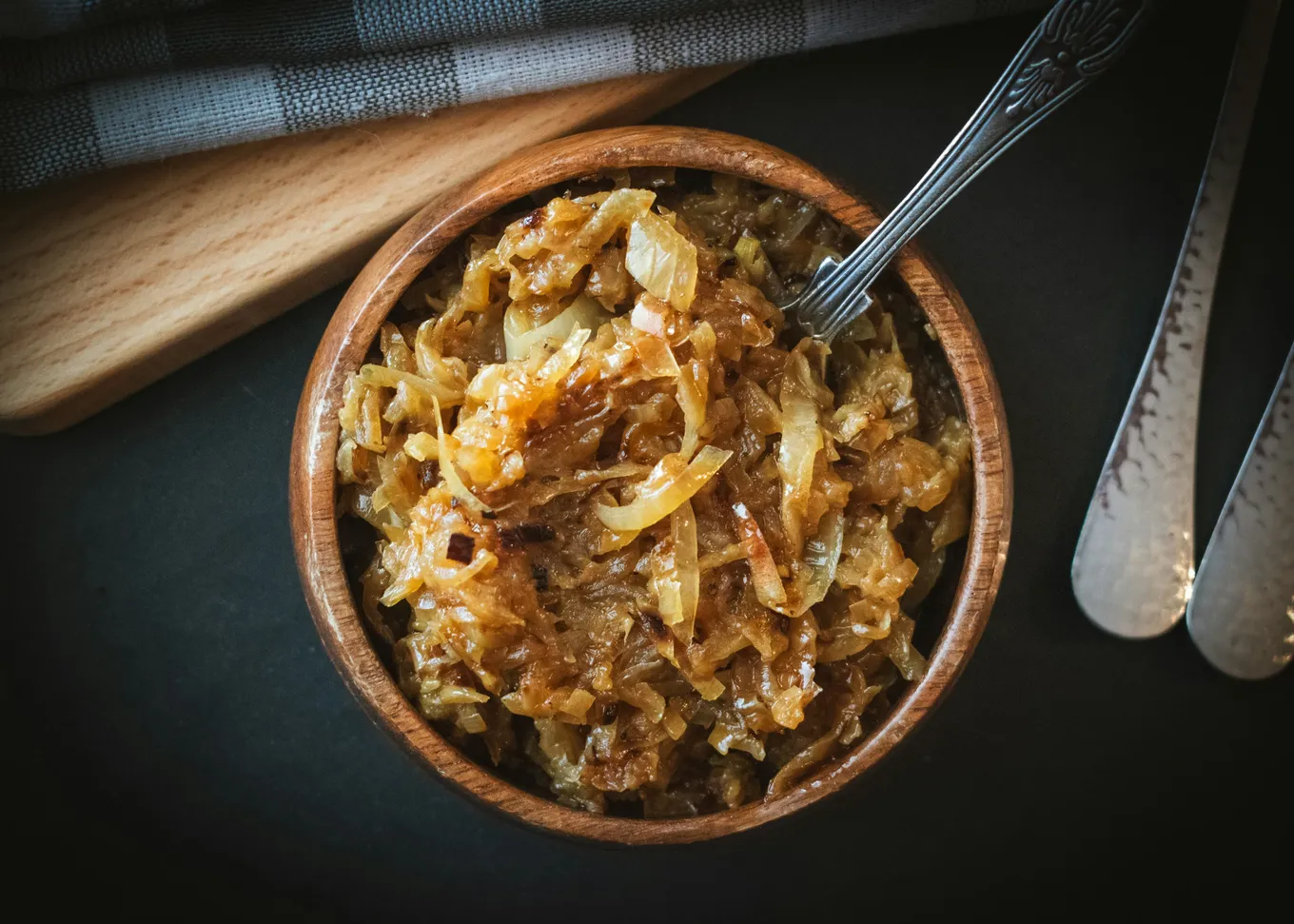
Prep 10 minCook 35 minTotal 45 minMakes about 1 cup, from 3 large onions
Ingredients
Method
- Halve the onions pole to pole, peel, and slice into 1/4-inch half-moons. Uniform thickness matters more than thinness.
- Put the onions in a large microwave-safe bowl, cover loosely with a plate, and microwave on high for 10 minutes, stirring once halfway. They will collapse to about half their volume and sit in a pool of liquid.
- Drain the liquid into a cup and keep it. That is onion sugar and flavor; it goes back in later.
- Melt the butter in a wide skillet over medium-high heat. Add the drained onions and the salt. Spread them out and leave them alone for 2 minutes.
- Stir, then stir every 2 to 3 minutes. Because the water is already gone, browning starts within 5 minutes instead of 20. Lower the heat to medium once the pan is browning steadily.
- When a dark fond builds on the pan, add a tablespoon of the reserved onion liquid and scrape it up. Repeat each time the fond gets close to burning. Use plain water once the liquid is gone.
- Cook until the onions are a deep chestnut brown and jammy, 18 to 25 minutes from the moment they hit the pan. They are done when a spoon dragged through them leaves a trail that fills in slowly.
- Off the heat, stir in the vinegar if using. Taste for salt.
Why the microwave works
An onion is roughly 90 percent water. The classic method spends the first forty minutes boiling that water off in the pan, and only then does browning start. Ten minutes in the microwave does the same job with no attention and no risk of scorching. What comes out of the bowl is already soft, translucent, and about half its original volume, so the pan time is all browning.
The reserved liquid is the reason to drain rather than cook the onions in their own water. Adding it back a spoonful at a time deglazes the fond, which is where the flavor is, without diluting anything.
Baking soda
A quarter teaspoon stirred in with the salt raises the pH and speeds the Maillard reaction further, cutting another five minutes or so. The trade is texture: the onions go softer and more jam-like, and too much makes them mushy and faintly soapy. Use it when the onions are going into a soup, dip, or sauce. Skip it when you want them to keep some body, as on a burger.
Make-ahead
They keep a week in the fridge and freeze fine in an ice cube tray. A cube in a pan with a splash of stock is French onion soup in ten minutes.
Tagged technique, onions, make ahead.